
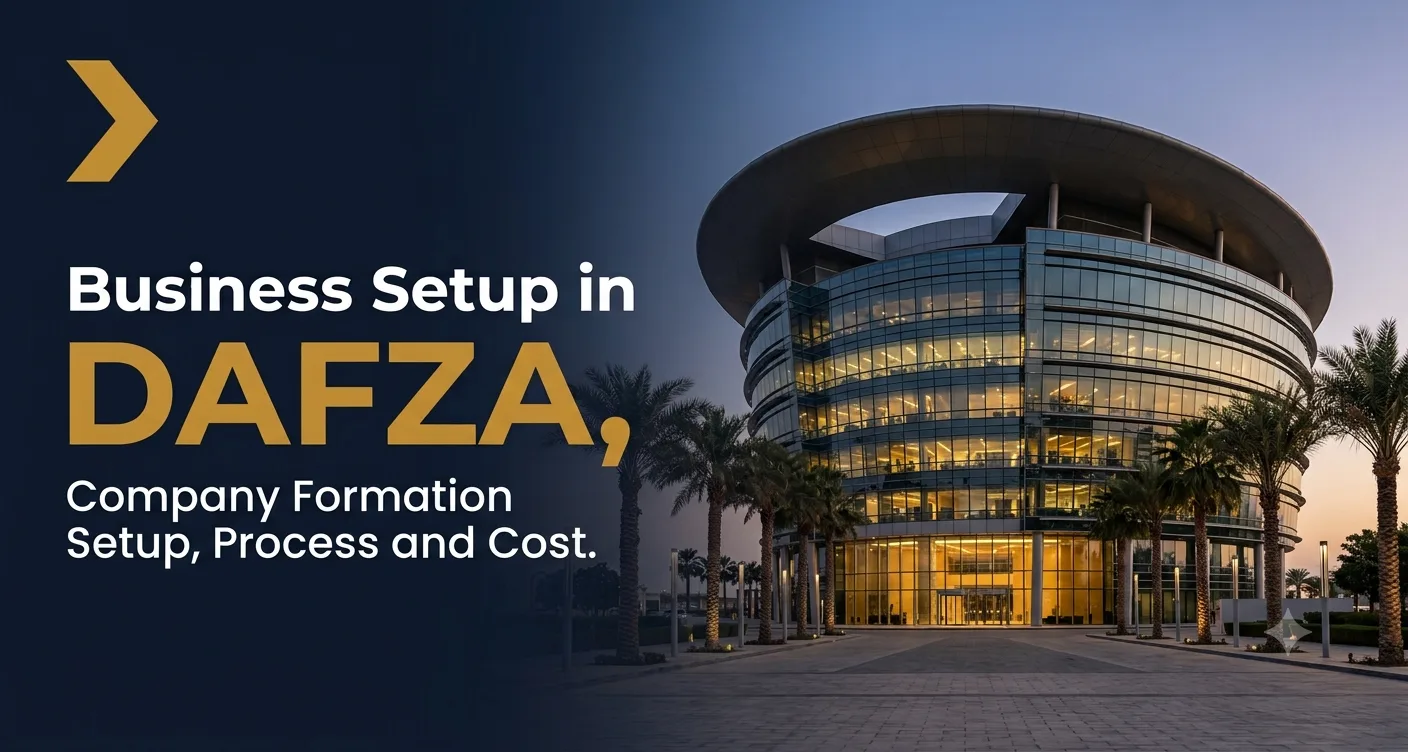
Dubai Airport Freezone, commonly known as DAFZA, is a well-established free zone located close to Dubai International Airport. Its location makes it particularly useful for companies involved in international trade, logistics, technology, services, and other cross-border activities.
Businesses can choose from several license types and company structures based on their activities and operating needs. Understanding the DAFZA free zone cost is therefore important before starting the registration process.
This guide explains the main costs, license options, company structures, and steps involved in setting up a business in DAFZA.
What Is a DAFZA Free Zone?
DAFZA is a Dubai free zone established in 1996. It is located close to Dubai International Airport and provides access to major international markets, including Europe, the Indian subcontinent and the Far East.
The free zone supports businesses across more than 20 sectors and provides facilities for offices, warehouses, industrial space, and cold storage.
DAFZA can be considered by businesses that need:
- A Dubai-based free zone company
- 100% foreign ownership
- International trade access
- Office or warehouse facilities
- Import and export capabilities
- A location close to Dubai International Airport
- A range of commercial and professional activities
The right setup depends on the business activity, company structure, and space requirements.
What Does DAFZA Company Formation Include?
DAFZA company formation involves selecting the appropriate license, legal structure and business space before completing registration.
DAFZA currently offers several license categories, including:
- Trade License
- E-commerce License
- Service License
- Industrial License
- General Trading License
- Single-Family Office License
- Multi-Family Office License
- Dual License with DET
- Talent Pass License
The appropriate license depends on what the company plans to do. For example, a trading company may need a Trade License, while a service provider may require a Service License.
Businesses should confirm their proposed activity before choosing a license. Some activities may also require approval or a no-objection certificate from an external government authority.
How Much Does DAFZA Free Zone Cost?
The DAFZA free zone cost does not have one fixed figure for every company. It depends on the license, business activity, company structure, office or facility requirements, and the number of visas required.
Businesses should consider the following costs when preparing their budget:
- License and registration fees
- Office or workspace costs
- Warehouse or industrial facility costs
- Visa and immigration charges
- Establishment-related fees
- Additional approvals
- Other services required by the company
The physical space can make a significant difference to the overall budget. DAFZA provides offices, warehouses, industrial spaces, and cold storage, so the final cost will depend on what the business actually needs.
This is why comparing only the advertised license price may not give an accurate picture of the total setup investment.
What Is the DAFZA License Cost?
The DAFZA license cost depends on the type of license selected and the activities included.
DAFZA offers different licenses for trading, e-commerce, services, industrial operations, and general trading. It also has specialized options such as Single-Family Office and Multi-Family Office licenses.
The cost should therefore be assessed after confirming:
- The intended business activity
- The required license type
- Number of shareholders
- Company structure
- Visa requirements
- Office or facility requirements
- Any external approvals
A basic license fee should not be treated as the complete cost of establishing and operating a company.
Which Company Structures Are Available in DAFZA?
DAFZA provides different company structures for businesses with different ownership and expansion requirements.
A Freezone Company can have between one and 50 shareholders, including individual and non-individual shareholders. DAFZA also permits foreign companies to establish branches of their existing businesses. A PLC structure is available for businesses with specific requirements, including companies considering a future listing.
The main options include:
- Freezone Company: Suitable for establishing a new business within DAFZA.
- PLC: Designed for companies that may have more complex ownership or listing requirements.
- Branch: Allows an existing foreign company to establish a branch in DAFZA.
Choosing the right structure early can help avoid changes later.
What Is the DAFZA Company Formation Process?
DAFZA describes its business setup process in three main stages: choosing the license, selecting the company type, and choosing the required space.
For a business owner, the process can be understood as follows:
-
Select the Business Activity
The first step is identifying what the company will do. The activity determines which license is appropriate and whether additional approvals are needed.
-
Choose the License
The company then selects the license that matches its approved activities. DAFZA offers trading, service, industrial, e-commerce and other license options.
-
Select the Company Structure
The applicant chooses between the available legal structures based on ownership and business requirements.
-
Prepare the Documents
Documents can include passport copies, shareholder information, business plans, company profiles, UBO information and corporate documents where applicable. Requirements can vary according to the company structure and shareholder type.
-
Select Office or Facility Space
DAFZA provides different types of business space, including offices, warehouses, industrial facilities, and cold storage.
-
Complete the Lease and Payment
Once the facility is confirmed, the lease agreement is issued for signing. After payment is confirmed, the business can proceed with the relevant completion steps and collect the office keys where applicable.
Why Do Businesses Choose DAFZA?
DAFZA’s location is one of its major advantages. It is close to Dubai International Airport and provides access to major transport and trade routes.
The free zone also offers 100% foreign ownership and full repatriation of capital and profits.
Its facilities can also support businesses that need more than a basic office. Companies can access warehousing, industrial space, and cargo-related infrastructure depending on their requirements.
For businesses involved in international trade, these facilities can be an important part of the setup decision.
What Should Businesses Check Before Setting Up?
Before proceeding with DAFZA company formation, businesses should calculate the complete setup and operating requirements.
They should confirm:
- Whether the intended activity is permitted
- Which license is required
- Whether additional government approval is needed
- How many visas are required
- What office or facility is suitable
- Whether warehousing is necessary
- What documents must be attested
- What the annual renewal requirements will be
- How the company will handle banking and tax compliance
A clear assessment can help businesses avoid selecting a license or facility that does not match their actual needs.
Making DAFZA Setup Decisions with Greater Clarity
The DAFZA free zone cost depends on several parts of the business setup, so there is no single price that applies to every company. License type, business activity, company structure, visas, and workspace can all affect the final budget.
The DAFZA license cost is only one part of the overall investment. Businesses should also consider accounting and bookkeeping services they will need after incorporation, alongside their facility requirements.
Prudentdubai.com helps businesses assess free zone options and plan their UAE company formation based on their activities, ownership structure, budget, and operational requirements. Their business setup consultants can assist with the relevant formation of steps, documentation and compliance considerations so that businesses can approach DAFZA setup with a clearer understanding of the requirements.